When you know the thought isn't true, and it still runs the whole day
You can see the pattern. The worry that keeps looping. The reaction that's bigger than the moment. The shutdown after a hard conversation. You understand why it happens, and understanding it hasn't made it stop.
That's the gap this workbook is built for. It brings together three of the most widely used therapy approaches — Cognitive Behavioral Therapy (CBT), Dialectical Behavior Therapy (DBT), and Acceptance and Commitment Therapy (ACT) — and puts their core skills in one place, written for someone working through them on their own.
Why three approaches instead of one
Each works on a different part of the problem:
-
CBT works on the thought. Catch the automatic interpretation, name the distortion, and check it against what actually happened.
-
DBT works on the wave. When emotion is already too high to reason with, these skills help you get through the next few minutes without making things worse.
-
ACT works on what won't budge. For thoughts and feelings that don't go away when you argue with them, ACT shifts the goal from winning that argument to acting on what matters anyway.
A reframe doesn't help mid-panic. A grounding skill doesn't touch a belief you've carried for years. Having all three means you're not reaching for the same tool in every situation.
What's inside
Book 1 — Cognitive Behavioral Therapy
- Core beliefs, underlying assumptions and automatic thoughts, and how they stack on top of each other
- The downward arrow technique for finding the belief under a recurring thought
- Common cognitive distortions, including how to spot catastrophizing as it happens
- Thought records for slowing a reaction down and examining it
- Graded exposure: approaching feared situations in steps, not leaps
- Progressive muscle relaxation
- CBT techniques for anxiety, anger, depression and obsessive thoughts
- Daily practices, journaling formats and a relapse-prevention plan
Book 2 — Dialectical Behavior Therapy
- Wise mind: the balance point between emotion and reason
- The "what" and "how" skills of DBT mindfulness, with practices such as mindful breathing, the five senses and mindful observation
- Distress tolerance for moments you can't fix yet: distracting, self-soothing, improving the moment, pros and cons
- Emotion regulation: identifying emotions, opposite action, building positive experiences and mastery
- Interpersonal effectiveness, including DEAR MAN for asking for what you need and holding a boundary
- Plain answers to common questions about DBT
Book 3 — Acceptance and Commitment Therapy
- The psychological flexibility model, explained without the jargon
- Acceptance, being present, cognitive defusion and self-as-context
- A step-by-step exercise for identifying your personal core values
- Setting goals that follow from those values
- ACT applied to worry, intrusive and obsessive thoughts, post-traumatic stress and depression
- Everyday mindfulness exercises and stress-management strategies
- How ACT compares with CBT and DBT, so you know which tool fits which moment
What you'll take away
- A way to catch a spiral earlier, before it takes the whole afternoon
- Skills for high-emotion moments when thinking it through isn't an option
- Clearer language for what's happening inside you, which makes it easier to explain to other people, including a therapist
- A values list you wrote yourself, for deciding what's worth acting on
- One reference for three approaches, instead of three separate books
Who this book is for
- You feel anxious or keyed up and can't always say why
- Your reactions feel bigger than the situation, and you're tired of the aftermath
- You get stuck in loops of worry or intrusive thoughts
- You've heard of CBT, DBT or ACT and want to understand how each one works, before therapy or alongside it
- You're in therapy and want structured practice between sessions
- You learn best by doing: exercises and prompts, not theory alone
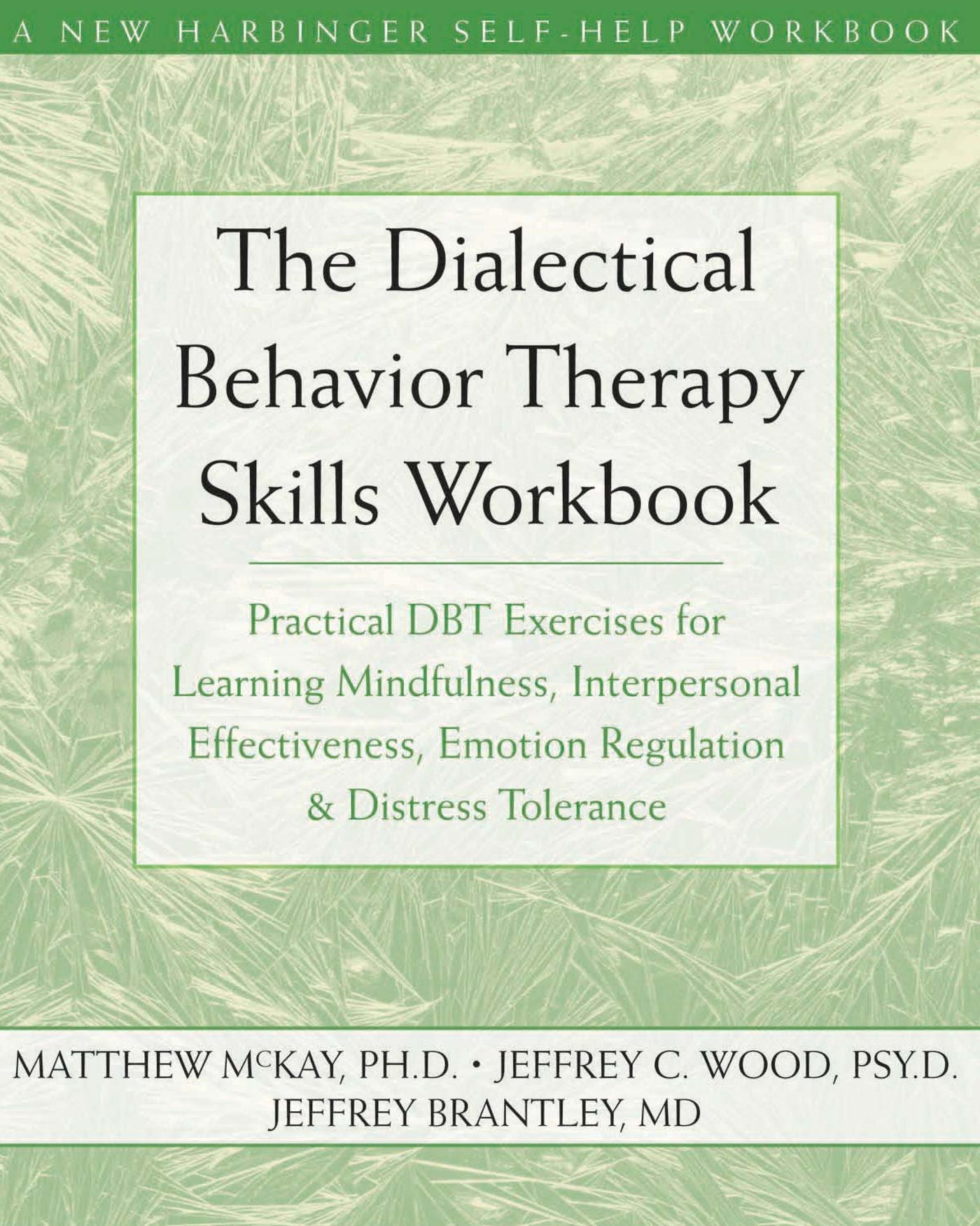
Not the right fit if you're a clinician looking for full treatment protocols. For that, DBT Skills Training Manual, Second Edition is the better choice.
Details
- 3 books in 1: CBT, DBT and ACT
- By David Lawson, PhD
- 290+ pages, PDF
- Instant download. Read it on your phone, tablet or computer, or print the exercises.
A note on care
This workbook is an educational self-help resource. It isn't a substitute for diagnosis or treatment by a qualified mental health professional. Some techniques, exposure work in particular, are best done with a therapist's support. If you're in crisis, contact your local emergency services or a crisis line.